News
Report reveals 'hidden' inequalities faced by minority ethnic women in the North
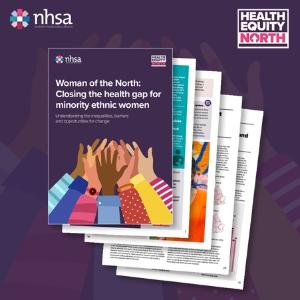
Minority ethnic women in the North of England face a lifetime of inequalities that stretch from childhood and maternity care to employment, mental health and later life, according to a new report co-led by Fuse Associate and Teesside University researcher Dr Nasima Akhter.
The Health Equity North report, Woman of the North: Closing the health gap for minority ethnic women, found that racial discrimination, poverty and regional underinvestment combine to produce significantly worse outcomes in the North than elsewhere in England, while major gaps in data continue to conceal the full scale of the problem.
Co-led by Fuse Associate Dr Nasima Akhter, Teesside University, and Dr Oluwaseun Esan, University of Liverpool, alongside over 50 other contributors - most of them minority ethnic women - the report shows that poor data and limited research obscure how ethnicity, gender and place shape lives.
“Our report highlights that persistent poverty and underinvestment in the North continue to undermine women's quality of life, deepen ethnic inequalities, and fuel mistrust and divisions rather than fostering positive relationships between ethnic groups."
Fuse Associate Dr Nasima Akhter
The report draws on expertise from researchers across the North and aligns with Fuse's commitment to addressing health inequalities through research, policy and practice partnerships.
Dr Nasima Akhter, Associate Professor of Public Health at Teesside University and Associate Member of Fuse, the Centre for Translational Research in Public Health, said:
“Our report highlights that persistent poverty and underinvestment in the North continue to undermine women's quality of life, deepen ethnic inequalities, and fuel mistrust and divisions rather than fostering positive relationships between ethnic groups. These inequalities are not confined to one part of women’s lives: they extend from childhood, maternity and mental health to employment, housing, violence and the justice system.
“Disadvantages can accumulate across the life course, creating poorer outcomes for women, and future generations. Yet major gaps in detailed ethnicity data and research continue to hide the true scale and regional pattern of these inequalities. Better evidence, transparent monitoring and clear accountability are essential if public services are to identify where need is greatest, target support effectively and track whether action is genuinely improving women’s lives.
“Without tackling the deep-rooted poverty and allocating resources matched to the needs in the North, it will be difficult to improve lives and health of minority ethnic women and also build stronger, more trusting relationships between different ethnic groups”
Key findings include:
- Black babies in the North face substantially higher neonatal mortality than White babies. In the North West, neonatal unit mortality was 29.9 per 1,000 babies admitted among babies born to Black women, compared with 18.4 per 1,000 among babies born to White women – around 1.6 times higher.
- In the North East and Yorkshire, the neonatal mortality gap was even greater: 32.6 per 1,000 for babies born to Black women compared with 17.0 per 1,000 for babies born to White women – almost twice as high.
- Black and Asian people are twice as likely to be in poverty than White people, with over three times as many experiencing persistent poverty.
- Minority ethnic women in the North of England report substantially lower levels of good health than those in the South and London – 77.4%, compared to 88.5% and 82.9%, respectively.
- Almost 1 in 5 (18.1%) minority ethnic women in the North have a long-lasting limiting illness, compared to 14.2% in the South and 15.8% in London. These conditions include cardiovascular disease, stroke, renal disease, some cancers, and poorer mental health outcomes.
- The risk of obesity-related diseases among Bangladeshi women was three times higher for women living in the North than those living in London.
- There are significant ethnic inequalities in severe mental illness and Schizophrenia, with minority ethnic women are 2 - 6 times more likely than White women to be diagnosed with non-affective psychosis.
- Significant ethnic inequalities persist in access to and treatment for mental health problems, with barriers including limited trust, culturally insensitive services and delayed diagnosis.
- Women from minority ethnic groups are more likely to have cancer diagnosed at a late stage. Women from African, Caribbean and Asian ethnicity have higher odds of being diagnosed late with breast cancer and ovarian cancer.
- Older minority ethnic people are 3.81 times more likely to experience loneliness than their White British peers.
- 45% of minority ethnic women report having experienced online abuse, and technology is increasingly documented as a coercive tool deployed within honour-based or community-monitoring contexts.
- Women from minority ethnic groups are more likely to be arrested, serve longer sentences and receive disparate treatment in Magistrates’ Court decisions including pleas and remand decisions, compared to White people.
- Employment among Asian women in the North West is 49%, while it is only 56% of Black women, compared with 72% of White women. Due to limited data, a full comparison of employment or economic inactivity across ethnic groups was not always possible across all regions.
- Minority ethnic women in the North of England face worse labour market outcomes than women elsewhere, despite more than 70 initiatives over the last decade to boost economic activity in these groups.
However, data shows that, despite the health challenges and barriers minority ethnic women face, they have higher life expectancy levels than White people (83.1 years). For Asian women, life expectancy is 86.9 years, 87.3 years for Bangladeshi women, 88.9 years for Black African women, 84.6 years for Black Caribbean and 86.9 years for other minority ethnic groups.
The report highlights the exceptional work already being led by voluntary, community, faith, and social enterprise organisations to challenge inequalities, build trust and provide culturally responsive support. However, it makes clear that these organisations cannot carry this responsibility alone: sustained funding, stronger partnerships and system-wide backing are essential to match their commitment and enable their expertise to deliver lasting change.
The new report is the first in a series on Woman of the North reports, and follows the flagship report, released in 2024, which showed how northern women live shorter lives, work more hours for less pay, are more likely to be an unpaid carer, and more likely to live in poverty than women in other regions of England.
The report calls for coordinated action from government, regional leaders and the NHS, backed by shared accountability, sustained investment and stronger community engagement, to deliver lasting improvements for minority ethnic women. It urges policymakers and public services to improve the collection and use of detailed ethnicity data so hidden inequalities can be identified and addressed, while ensuring minority ethnic women are involved in designing, delivering and evaluating the policies and services that affect their lives.
Additional findings include:
Poverty and food insecurity
- People from Pakistani, Bangladeshi and Black ethnicity were more likely to be living in the 10% most deprived neighbourhoods compared to individuals of White British background.
- Black people are 2.5 times more likely to experience food insecurity than White people
General health and life expectancy
- Bangladeshi and Pakistani women are almost four times more likely to suffer from asthma than White women.
- Minority ethnic women in the North have reported a higher prevalence of obesity (64.5%) than those in the South (43.3%) and London (53%) – despite participating in higher levels of physical activity. This prevalence is also much higher than the prevalence among White women in the North (58.2%).
- Roma people in England are estimated to have life expectancy up to 10 years lower than non-Roma populations, with Roma women experiencing particularly poor health.
Mental health
- Minority ethnic women, particularly those of Black ethnicity tend to experience more severe treatment pathways for mental health and higher rates of detention under the Mental Health Act.
- Cultural stigma, fear of discrimination, limited understanding of mental health, a lack of information about where to seek help and limited access to culturally sensitive services can prevent minority ethnic women from accessing care, leaving many to suffer in silence.
Employment and economic activity
- In Yorkshire and Humber, more than 14% of Asian women are unemployed, compared with just 2.5% of White women.
- Economic inactivity is significantly higher among minority ethnic groups in the North: 44% of Asian people in the North West and 41% in Yorkshire and Humber are economically inactive, compared with 25% of White people in both regions. In the North West, 36% of Black people are also economically inactive, compared with 25% of White people.
Maternity care and neonatal health
- Stillbirth rates are substantially higher for Black women than for White women – in the North East and Yorkshire, the highest stillbirth rates were recorded among women from other ethnic groups (9.2 per 1,000) and those whose ethnicity was not stated (9.7 per 1,000), highlighting significant gaps in the data available to understand ethnic inequalities in the North.
- Pregnant women from minority ethnic groups are more likely to have an overweight BMI, while a family history of diabetes was reported by 41% of Asian mothers and 25.5% of Black mothers, compared with 18.0% of White mothers.
Children in care and child welfare
- Black and Asian children enter care later than White children, on average at age 7 compared to age 5, and are less likely to have received a child protection plan beforehand.
- Once in care, Black and Asian children are less likely to be placed for adoption or receive a Special Guardianship Order. 16.5% of White children and 15.6% of Mixed ethnicity children are placed on adoption orders, compared to 5.8% of Black children and 4.7% of Asian children.
- Evidence suggests that professionals are more likely to report Black children to children’s services compared to White children
- Black children are more likely than White children to be investigated by the police. Adultification also contributes to Black children in particular being viewed as more responsible and culpable for their actions than their White peers.
Violence against women and girls
- In the North, 7.1% of women with mixed ethnicity experience domestic violence – the highest of any group and higher than White women (5.0%).
- Minority ethnic women are also disproportionately affected by forms of abuse including coercive control, economic and immigration-related abuse, sexual violence, forced marriage, so-called honour-based abuse, FGM and technology-facilitated abuse.
Women in the criminal justice system
- Across the North, whilst the majority of the female prison population (which makes up 4% of the national population) are White, other ethnic groups continue to be disproportionately represented compared to the general population.
Dr Oluwaseun Esan, Lecturer in Public Health at the University of Liverpool and co-lead report author, said:
“Our research found that minority ethnic women living in the North are from diverse backgrounds and not a monolithic group. Despite the structural inequalities of decades of underinvestment in the North, gender, and racial discrimination they experience, they effectively organise themselves within their local communities and often in mixed ethnic group settings. These trusted relationships sometimes help to navigate financial hardship, transport problems, poor communication and culturally insensitive services where statutory services have not effectively reached minority ethnic women.
“The UK Government's rediscovered emphasis on prevention and the shift from hospital to community-based care is welcome, as is the renewed Women’s Health Strategy. These must be designed with minority ethnic women and the trusted community organisations that already understand and support them, rather than imposed without them.
“That means sustained funding that is scaled up in proportion to local need and for community-led services, culturally competent and genuine involvement at every stage from research and policy design to delivery and evaluation, and genuine involvement at every stage from research and policy design to delivery and evaluation.”
Hannah Davies, Executive Director of Health Equity North and CEO of the Northern Health Science Alliance, said:
“This report paints a difficult picture for the health of women from minority ethnic groups in the North of England across the life course.
“Our recommendations include sustained investment, shared accountability and coordinated action across government, community groups and the NHS to scale what works and deliver lasting improvement - because we know change is possible.
"Interventions such as the Government's announcement that the NHS will take a public health approach to violence against women and girls is a significant step. This is particularly important for minority ethnic women, who may face culturally specific abuse and additional barriers.
“Health Equity North brings together academics from across the region to highlight research taking place, where there are gaps – for example in data collection - and to work to drive system change and we will work with those across health, public service and communities to help facilitate that change."
Read the report: Woman of the North: Closing the health gap for minority ethnic women
Last modified: Wed, 07 Oct 2026 17:40:13 BST