News
Government confirms ban on high-caffeine energy drinks for under-16s
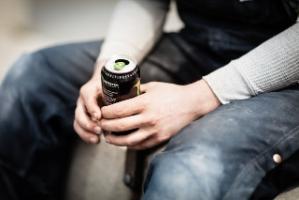
Research from Fuse, the Centre for Translational Research in Public Health, has helped build the evidence base behind the UK Government's decision to restrict the sale of high-caffeine energy drinks to children under 16 in England.
The Government published its response to the consultation on restricting sales, confirming plans to introduce legislation that will prohibit the sale of high-caffeine energy drinks to under-16s from April 2027, subject to Parliamentary approval. The restrictions will apply across retail settings, including shops, vending machines and online sales.
The announcement marks a significant milestone following years of research and campaigning highlighting the impact of energy drink consumption on children's physical health, mental wellbeing, sleep and educational outcomes. Research led by Professor Amelia Lake, Deputy Director of Fuse and Professor of Public Health Nutrition at Teesside University, has played an important role in strengthening case for action.
It is estimated that around 100,000 children consume at least one high-caffeine energy drink every day. Evidence suggests these products can contribute to anxiety, disrupted sleep, reduced concentration and poorer educational attainment, with consumption often highest among children living in more deprived communities.
The announcement comes just weeks after Fuse joined a coalition of health organisations, academics, youth campaigners and celebrity chef Jamie Oliver in calling on the Government to deliver its long-promised restrictions without further delay. The coalition warned that continued inaction was putting children's health, wellbeing and learning at risk and highlighted the strong public support for introducing age restrictions on sales.
Professor Amelia Lake, Deputy Director of Fuse, the Centre for Translational Research in Public Health, and Professor of Public Health Nutrition at Teesside University, said:
"I welcome the publication of the consultation response and the confirmation that legislation restricting the sale of high-caffeine energy drinks to under-16s will be introduced.
"Many people assume that children are already unable to buy these products, but legislation is needed to create a fair and consistent approach across all retail settings, including shops, vending machines and online sales.
"This decision demonstrates the Government's commitment to prioritising the health and wellbeing of children and young people. The evidence is clear that energy drink consumption is associated with poorer physical and mental health outcomes, disrupted sleep and reduced concentration and poorer educational attainment, making this an important step forward for children's health."
Building on earlier research
The research acknowledged by the Government builds on nearly a decade of work by Fuse researchers examining the impact of energy drinks on children and young people.
A review led by Professor Lake examined 57 studies involving more than 1.2 million children and young people across 21 countries. The study found consistent associations between energy drink consumption and poorer physical health, mental health, sleep quality and educational outcomes.
This work built on earlier Fuse research published in 2016, which identified links between energy drink consumption and poor academic performance, sleep problems, unhealthy dietary habits and increased risky behaviours. In 2017, Fuse researchers were also the first to publish in-depth research exploring children's views on energy drinks, finding that the products were widely available, heavily promoted and often sold for less than bottled water.
Professor Lake has previously contributed evidence to national policy discussions on energy drinks and was involved in efforts that encouraged many major UK supermarkets to introduce voluntary restrictions on sales to children.
The Government intends for the legislation to come into force in April 2027, subject to Parliamentary approval.
Background: a decade of Fuse research on energy drinks
The research acknowledged in the government announcement is an update to a review in 2016 by researchers from Fuse, the Centre for Translational Research in Public Health, at Teesside University and Newcastle University. It found that energy drink consumption was more common among boys than girls, and was also associated with increased risky behaviours such as substance use, violence, and unsafe sex. The research also links consumption of the drinks with an increased risk of poor academic performance, sleep problems, and unhealthy dietary habits.
In 2017, the same researchers from Fuse were the first to publish research exploring in-depth the views of children, as young as 10-years-old, on energy drinks. The academics called on the UK government to take action on the sale of energy drinks to under 16s after finding that they were being sold to young people cheaper than bottled water.
The research revealed that energy drinks were easily available in local shops; sold for as little as 25p (‘four for £1’ promotions); targeted at children through online adverts, computer games, television and sports sponsorship; and linked to extreme sports, gaming, sexuality, gender, and use of sexualised imagery.
Previous research had also found that up to a third of children in the UK consume caffeinated energy drinks on a weekly basis and that young people in the UK were the biggest consumers of energy drinks in Europe for their age group.
National campaign
Professor Amelia Lake was involved in a national campaign, fronted by celebrity chef Jamie Oliver, to restrict the sale of energy drinks to teenagers, and gave evidence to the House of Commons Science and Technology Committee on the effects of energy drinks on young people’s mental and physical health. Many large UK supermarkets subsequently agreed to voluntarily ban the sale of energy drinks to children.
Regulation in other countries
A number of countries have attempted to regulate energy drinks, including bans on sales to under 18s in Poland, Lithuania and Latvia. Norway has recently announced a sales restriction to come in force in 2026. The UK government ran a consultation on ending the sale of energy drinks to children in England and also proposed this in their 2019 green paper ‘Advancing our health: prevention in the 2020s’. While 93% of respondents to the consultation supported restricting sales to under 16s, there has been no further action. In 2022, the devolved government in Wales launched its own consultation to ban the sales of energy drinks to under 16s. A consultation also ran in 2025 but has not yet been reported.
What are energy drinks?
The UK Food Standards Agency says that energy drinks are generally drinks with high levels of caffeine. They are usually marketed as giving a mental and physical 'boost' by providing more ‘energy’ than regular soft drinks. They are different to ‘sports drinks’ which might be used to replace electrolytes lost during exercise. Caffeine levels in a can of energy drink can vary between 80mg (equivalent to two cans of cola or a mug of instant coffee) and 200mg (equivalent to five cans of cola).
About Fuse
Fuse, the Centre for Translational Research in Public Health, brings together six Universities in North East England and North Cumbria (Durham, Newcastle, Northumbria, Teesside, Cumbria, and Sunderland) in a unique collaboration to deliver world-class research to improve health and wellbeing and tackle inequalities.
Fuse is a founding member of the National Institute for Health and Care Research (NIHR) School for Public Health Research (SPHR).
Find out more
Fuse’s energy drink research activity and impact has been captured in this timeline:
This research has been summarised in the following:
- Podcast: Should we be concerned about energy drinks and young people’s health?
- Policy brief: Evidence shows wider range of risks associated with energy drinks in children
- Blog post: Energy drinks may be commercially lucrative but what is more valuable than the health of our children?
Photo by thom masat on Unsplash (with modifications)
Last modified: Fri, 17 Jul 2026 10:34:01 BST