Meet a Public Partner
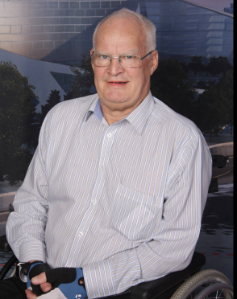
Patrick Mayne
**Content/trigger warning: substance use; mental health; suicidal thoughts**
Tell us a bit about your background
I am 77 years old and use a wheelchair. I had polio at about the age of one, which left me with a short, weak leg. Over the years I have also lived with spinal problemrs, diabetes, arthritis, sleep apnoea and COPD (Chronic Obstructive Pulmonary Disease), the latter linked to having weak lungs after spending time in an iron lung as a child.
I have had big highs and lows. I have been through alcohol addiction, bankruptcy and periods of suicidal thoughts. My family has also faced many health challenges. My children have experienced dyslexia, autism, meningitis and epilepsy, and my eldest son died of cancer. These experiences have shaped who I am and have given me a deep understanding of how much illness and disability can affect every part of a person’s life.
What do you enjoy doing in your free time?
Since returning to the UK from South Africa in 2017, I have realised my interest in learning how the health service works. I genuinely enjoy trying to understand it and thinking about how it could work better. As I am retired, I tend to think of all my time as free time.
How did you first get involved in the Fuse public partner network?
I first became involved in the Fuse public partner network after a fellow volunteer suggested it to me. I have a habit of saying yes to opportunities to volunteer, so that is how I ended up here.
What areas of public health research are you particularly interested in?
Much of my interest in public health research comes from cancer. My mother and father, several aunts and uncles, and my son all died of cancer, and I now spend a great deal of my time volunteering for a cancer charity. Through that work, I have come to believe that one of the biggest issues for many cancer patients is not always the clinical care itself, because people often have faith in that. The real gaps are often in the personal support around it: anxiety, depression, transport, having someone to talk to, and, above all, having someone who can guide them to the right help at the right time.
I am also very interested in health inequalities. I find it deeply disappointing that I do not see enough progress since the Marmot Review in 2010. In my view, health inequalities are driven largely by the social determinants of health, or what many people would simply call poverty. We know the causes are many and complex, but every person’s circumstances are different, which is why support needs to be personal.
Have you been involved in research before?
I have been involved in several projects as a patient representative, although I would not describe myself as a researcher.
Why is having your voice heard in public health research important to you?
Because I want to help change the health service for the better.
What one piece of advice would you share with someone curious about public involvement and engagement?
I am not qualified to give advice, because every individual is different. But I do suggest a few guiding principles:
“Who dares wins.”
“Any intelligent fool can make things bigger and more complex. It takes a touch of genius and a lot of courage to move in the opposite direction.” Albert Einstein
“A person’s intelligence is directly reflected by the number of conflicting attitudes she can bring to bear on the same topic.” Lisa Alther
“Do not hold your views too firmly. Every fool is fully convinced.” Baltasar Gracián
Last modified: Mon, 29 Jun 2026 13:43:47 BST